Quizizz to wake up the kids!

In an ideal world, all of our students would be attentive, energetic to learn and always present in class (mind, body and soul). Teaching would be a joy because we would not have to deal with sleepy, tired or distracted students. However, as a cruel reminder that we do not live in the world of ideals, it would not be your average class if there weren’t at least one of those sleepy, tired or distracted student. This is especially true since most of them have classes from morning till evening and still have to attend night study sessions or tuition. So when is a student to take a break? In class apparently.

No matter how interesting or scary a teacher is, there would always be that one (only one if you’re lucky) student that gets bored and dozes off. I find overcoming this quite frustrating sometimes as if the student was letting me know that I was boring. But then judging by the rest of the class, it might not be a “me” problem, but a “he/she” (the student) problem.

Upon realizing this, I experimented with a few way to grab their attention or at least make sure any of the student won’t fall asleep. One way I found was to give them something fun to do right before their lesson. This in turn, would wake the students up due to the excitement and they seem to be more alert after the 10 to 15 or so minutes of fun and games. This is where Quizizz comes in.
I find Quizizz very handy as a refresher tool because it not only allows me to test their understanding on the previous topics that I’ve taught them, but also help to keep the students on their toes so they would always read up before classes.

Of course, I could just replace Quizizz with a paper pop quiz before every lesson begins, but that takes away one of Quizizz’s best elements away from the students: Fun. The students would dread it if I were to give them pop quizzes before every lesson, but are more than happy to have the exact same questions before lessons on Quizizz. Besides that, Quizizz’s ranking and point systems takes the fun to another level and adds a competitive element to it. Giving students a reason to chase that high of being top in the class or dethroning someone else from the top of the hill.

Quizizz, like most technology based educational tools, do have a fatal drawback though. It heavily relies on the internet and devices to access it. Being an internet tool makes the Quizizz experience entirely dependant on the internet. Should the internet be less than ideal or cut out in the middle of the session, the student’s may lose all their progress or get logged out of their session.

Another aspect to look at is the inclusivity of Quizizz as it relies on people to have a device to access it. Unlike some tech-based tools that only relies on the instructor to have a device to use it (such as Powerpoint, Prezi and to an extent PHET simulations), Quizizz is an interactive experience. Hence, in order to interact with it, a student will need a device to do so. However, not every student would have the privilege to have smartphones or a laptop on hand. All those less fortunate students can do is sit there and watch their friends have all the fun or group up with someone who has a device and help out. As a temporary solution to make sure no one is left out, I instructed my students to pair up if any of them does not have a smartphone when I conducted a Quizizz game today. However, I do feel that Quizizz is best experienced as an individual game so that everyone would have to rely on themselves only to be king of the hill.

Maybe one day in the future, we would have blazing fast internet no matter where we are and every student would have a smartphone to access all of the tech-based educational tools. I wait patiently till that day to come as it would leapfrog all of these efforts in tech-based education.

Till next time, Felix.

Topical test with Google Forms

As much as I believe that the student need to be tested from time to time, I do have to admit that topical test or exams season is one of the most dreaded times for me. The whole process of setting the test papers, then conducting the exams in sync with the other classes, and then marking the papers makes me so anxious. Did we get enough copies for test papers for the students? Are the pictures clear enough to see due to the eco mode setting of the photocopiers? Are they any typos in the exams or did we leave anything out? These are the many things that I hate facing every exam season.

What’s worse is the time you have to put in to mark the student’s answers. From illogical answers to illegible handwriting, I’ve seen it all. Sometimes I do envy the math teachers as some students tend to leave the answers blank. So easy to mark. The science and physics subject however, some students can get really creative with their answers, and worst still, I’ll have to try to understand their point to see whether its worthy of a mark or two.

However, the times have changed and along that our methods. I’ve been experimenting with google forms as a means to conduct topical tests. This is no way a perfect solution but developing this space might lead to a lot of new possibilities. For now, I stick with only multiple choice questions. So it can be graded by google the moment they submit their answers. I find that very handy as you don’t have to go through all their papers to see how well (or badly) did the students do in their exams. Another plus is that the students can also see how well (or badly) they did, something they had to wait a few days to a week or two when doing in on paper.

Another great thing about using Google forms for the test is that you get to analyze the data from the student’s answers. Insights such as which questions did the students get wrong the most or how much do they understand a topic can be auto generated by Google forms. Bear in mind, these insights are generated as soon as the test ends. That’s something that would have taken at least a day for us to do manually so I am most definitely grateful for that.

On the downside of this is that it may not be possible to grade subjective questions automatically. To be honest, if Google forms were able to do that, I would have started a petition to the school to use Google forms a long time ago. I guess this is why we cannot fully implement online forms such as Google forms to conduct important exams.

Another thing about this is that that the students would have to be online to answer. Hence, monitoring all of them so that they would not go online to check for the answers would be next to impossible. After all, they are pretty cunning when presented with opportunity. Yet another reason why we may not be able to implement Google forms in our major exams.

Maybe I’ll find some magical setting that would solve all the limitations on this format. Or perhaps a better program would be created in due time, specifically designed to meet our needs as teachers. But whatever it is, we’ll just have to wait.

Till next time, Felix.

PHET simulations with the class

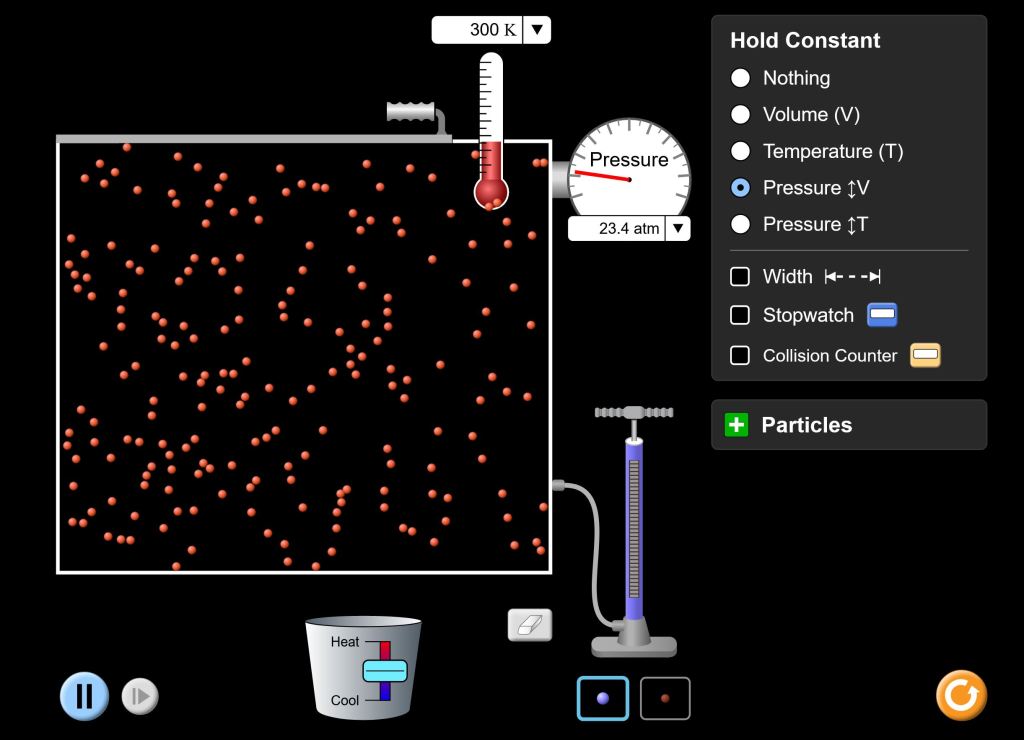
Today before investigating the validity of Charles law via an experiment, I decided to show the students what would happen if we heat up a gas under constant pressure. This is so that they could first identify and visualize what would happen in such a case. After all, if they do not know what to expect, then how can we expect them to know what to observe during the experiment.

I decided to use my go-to simulation website, PHET interactive simulations because they are pretty much the only reliable source for physically accurate simulations when it comes to the science of matter.

Of course, the students were quite fond of this website as I have used in in class several times before. I do however, find the animation a little bit too kid oriented to my liking, but then again it would not be a great tool for kids leaning if it leaned towards the adult side. Anyway, however it looks like doesn’t matter as long as the students can benefit from it.

I do think that more people should use these simulations when it comes to teaching children processes. I do remember the days I used to chalk and talk some of these processes and the students would have to fill in the blanks with their imaginations. For some its intuitive, for some its not. And repeating the explanations over and over again to those that don’t get it can be somewhat frustrating at times. That’s where these simulations can come in handy. No more does the students have to try hard to imagine what molecules look like or how would a rocket move forward by pushing things backward.

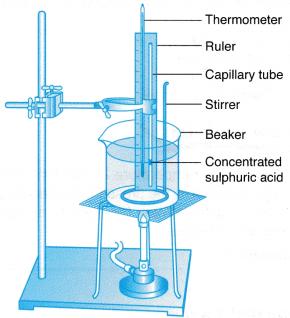
Things aren’t all that perfect though, as seen in today’s simulation. This is because that the experiment that the students will be conducting would not exactly be the same as the experimental setup of the simulation.

PHET simulations on the Gas Laws

The experimental setup for today’s experiment

I guess one thing that simulations lack is the variety of which experiments or daily examples can be done in. Naturally, I don’t blame the website for not meeting all of my needs. It’s just that sometimes I wish there would be simulations for every scenario that I would want to show to my students. But it is unrealistic for anyone to think that the developers of the site would create a simulation for everything. I just wish we have more resources. (side note, do comment if you know of any site that hosts good physics simulations. Cheers!)

If anything, PHET simulations have made my teaching life easier. I do encourage the students to go on it from time to time to explore, though I doubt they do as they’re always so excited every time I put PHET simulations on as if they have never seen it before.

As good as the simulations are, I only got one of the students to try it out. In an ideal world, I would have gotten every student to try out this simulation as it can solidify their understanding about the Gas Laws. However, due to time constraints (and mostly the fact that all the students don’t have a computer at the time to try out the simulations), only one could really try out this simulation. Perhaps I could show them the simulations at the computer lab? But then again, they would need to move back to the lab 10 minutes after for their experiment. I guess I’ll just have to find a solution, one day.

Till next time, Felix.

Design a site like this with WordPress.com
Get started